A Filipino scientist under the Department of Science and Technology’s Balik Scientist Program has led major scientific breakthroughs that improve food safety, protect the environment, and support local food producers, the agency announced.
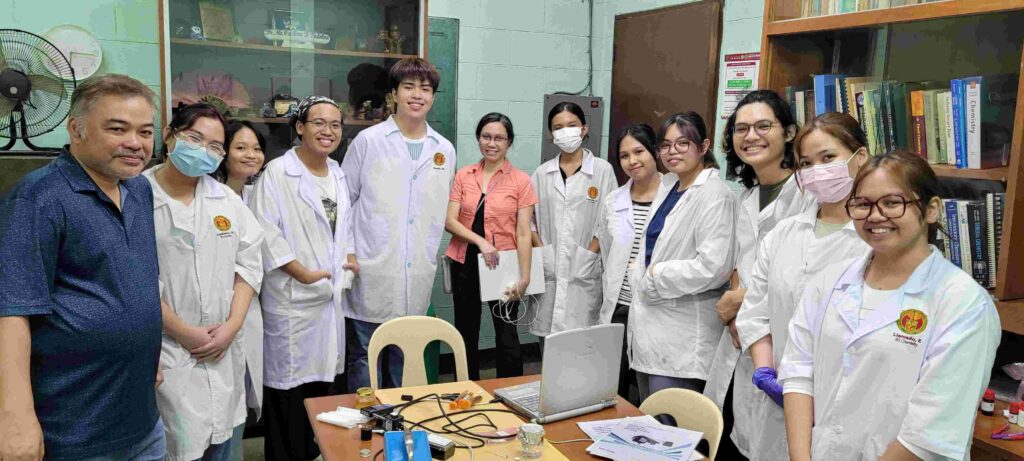

Dr. Elmer‑Rico E. Mojica, a Balik Scientist of the Department of Science and Technology (DOST), successfully characterized the chemical profiles of stingless bee pollen and propolis, clearly distinguishing their nutrient content and antioxidant levels—an advance that helps ensure the safety, authenticity, and quality of daily food products.
Scientific methods that safeguard consumers and producers
Using advanced analytical chemistry techniques such as Fourier Transform Infrared Spectroscopy (FTIR), Ultraviolet–Visible Spectroscopy (UV-Vis), fluorescence spectroscopy, and chemometrics, Dr. Mojica was able to identify markers that determine whether food items are safe, genuine, and of high quality.
Unlike traditional wet chemistry tests, these methods are rapid, non-destructive, and low-cost, making them practical for routine quality control. According to DOST, the approach benefits not only consumers but also small-scale beekeepers and local food producers by providing accessible tools to verify product integrity.
First baseline data on microplastics in food and waterways
Beyond food quality, Dr. Mojica’s work also exposed the extent of unseen pollution affecting Filipino families and communities. His studies generated the country’s first baseline data on microplastics in key consumer products—including powdered milk and honey—as well as in waterways and coastal areas in Miagao, Iloilo. All tested samples, DOST reported, were found to contain microplastics, highlighting an emerging environmental and public health concern.
DOST officials cite long-term national impact
DOST Secretary Renato U. Solidum Jr. said Dr. Mojica’s contributions demonstrate the lasting value of the Balik Scientist Program.
“Even with his short-term engagement as Balik Scientist, Dr. Mojica has cultivated long-term impact in the scientific community. What makes our Balik Scientists like Dr. Mojica is their ability to integrate global expertise with the needs of our local sectors,” Solidum said.
Dr. Leah J. Buendia, DOST Undersecretary for Research and Development and program head of the Balik Scientist Program (BSP), stressed the importance of sustained support for scientific capability-building.
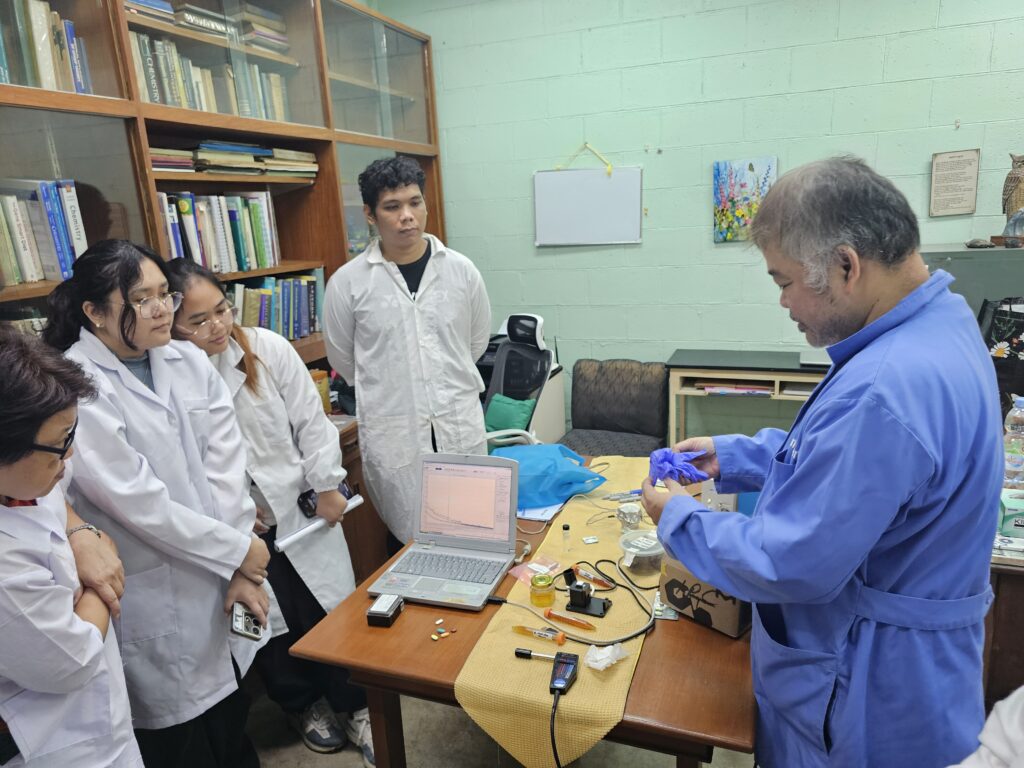
“As one of DOST-PCIEERD’s 186 Balik Scientists, Dr. Mojica’s exceptional work allows more researchers and students to gain advanced analytical chemistry knowledge through hands-on experience with state-of-the-art instruments and methods,” Buendia said, describing him as a “scientist with a heart, a Balik Scientist.”
To date, the BSP has supported 709 Balik Scientists with a total of 956 engagements nationwide.
Strengthening universities and research networks
Aside from his research breakthroughs, Dr. Mojica made lasting contributions to the University of the Philippines Los Baños (UPLB) by providing laboratory instruments and expanding research networks. He helped establish collaborations with the University of the Philippines Visayas, Cavite State University, University of Santo Tomas, and De La Salle University.
During Dr. Mojica’s exit presentation on March 6, 2026, Niñaliza H. Escorial, Deputy Executive Director of DOST-PCIEERD, said his expertise in vibrational spectroscopy and analytical chemistry significantly enhanced national research capabilities and directly helped local producers.
She also announced the establishment of a new BSP Research and Development Grant, with an annual call for proposals to fund medium- and long-term Balik Scientists in the fields of industry, energy, and emerging technologies. Two proposals have already been approved under the new grant, she said.
Distinguished global career brought home
Before returning to the Philippines as a Balik Scientist grantee, Dr. Mojica was already an accomplished Filipino chemist based in New York City, with more than 118 peer-reviewed journal articles, book chapters, and encyclopedia entries to his name.
DOST said his work exemplifies how Filipino scientists abroad can bring global expertise back home—advancing food safety, raising environmental awareness, and strengthening the country’s scientific and technological foundation.#