Health officials and medical societies are throwing their weight behind proposed legislation mandating a gradual reduction of sodium in processed foods, warning that the country’s soaring rates of hypertension, chronic kidney disease, and other non-communicable diseases are causing premature deaths and placing an unsustainable financial strain on families and the national health insurance system.
Premature Deaths Alarmingly High
52 to 56 percent of non-communicable disease deaths in the Philippines are considered premature—meaning Filipinos are dying below the average life expectancy of 70 years. This figure is significantly higher than in Singapore, where premature NCD deaths fall below 40 percent.

Dr. Valerie Gilbert T. Ulep, Senior Research Fellow of the Health Economics and Finance Program of the Philippine Institute for Development Studies (PIDS), revealed these figures during the “Iwas Alat, Iwas Sakit” Fireside Chat organized by IMAGINELAW on Saturday, April 11, at the Microtel UP Technohub.
“What’s alarming in the Philippines is that many die early,” Dr. Ulep stated, explaining that a 53-year-old dying from chronic kidney disease still had productive years ahead.

Dr. Sean Paolo Aquino, Medical Officer and Program Manager for Cardiovascular Diseases at the DOH’s Disease Prevention and Control Bureau, confirmed that non-communicable diseases have consistently ranked among the top causes of mortality for the past five to ten years, with the pandemic having diverted attention and services away from NCD prevention.
Experts from the Department of Health, the Philippine Society of Hypertension, the Philippine Society of Nephrology, and other stakeholders laid out a stark picture: cardiovascular disease remains the top killer in the Philippines, followed by stroke and cerebrovascular disease, with diabetes and chronic kidney disease also ranking among the leading causes of mortality.
PHP 36 Billion Spent on Dialysis Alone
The financial toll is staggering. Representatives from the Philippine Society of Nephrology reported that end-stage renal disease claims accounted for PHP 36 billion in 2025, covering 3.56 million dialysis treatments. This represents approximately 20 percent of PhilHealth’s total reimbursements—an unusually high proportion for a single condition compared to other insurance systems.
“Imagine putting those resources toward prevention, early screening, and management of earlier stages of chronic kidney disease,” said Dr. Marge Absalon-Trinidad, Cluster Head of Patient Care at the Philippine Society of Nephrology. “In the long run, it’s not sustainable when you put all the resources to treat late-stage disease.”
Dr. Kate Wad-Asen, Medical Officer of Disease Prevention and Control Bureau of the DOH noted that PhilHealth reimbursements for dialysis have increased from 2,500 to 4,000 to 6,000 pesos per session, yet the number of patients continues to grow exponentially.
The onerous solution in addressing NCDs has always been PhilHealth, which in the long run will affect the financial capability of the state health insurance company.
The Silent Killer Problem
Medical experts emphasized that chronic kidney disease is a “silent killer”—stages 1 through 4 are completely asymptomatic. Most Filipinos only consult a doctor when they feel something is wrong, leading to late-stage diagnoses when dialysis becomes the only option.
Hypertension remains the number one cause of chronic kidney disease, and excessive sodium intake is a major modifiable risk factor.
The average Filipino consumes 4.1 grams of sodium per day, more than twice the World Health Organization’s recommended limit of 2 grams, exposing themselves to heightened risks of hypertension, stroke, kidney disease, and heart failure.
Population-Level Solutions vs. Individual Responsibility
A key theme throughout the discussion was that relying solely on individual education and behavior change is insufficient. The panel advocated for population-level interventions, particularly sodium reformulation of processed foods.

Jeline Marie M. Corpuz, RND, a registered nutritionist and dietitian, explained that despite the Philippines being an agricultural country, most Filipinos consume instant noodles and prepackaged foods—“pancit canton or noodles, or pre-packaged foods, and de lata”—because they are affordable, accessible, and easy to prepare.
“I remember working in an island with many fishermen,” one physician shared. “I assumed they ate mostly fish. But they told me they eat pancit canton. Why? Because they want to sell their fish. They buy more filling, more delicious food. Their catch will last one week.”
“We are very much dependent on import products, hence, too much dependence on processed or packaged foods,” said Atty. Kat Tiambeng, moderator of the fireside chat.
Stepwise Approach Proposed
The proposed sodium reformulation bill takes a stepwise approach based on best practices from countries like South Africa. Rather than an abrupt reduction, the policy would identify food items that contribute most to sodium consumption and gradually reduce content—perhaps 10 percent over three years, followed by another 10 percent.
This approach considers both the food industry’s need to adjust formulations and Filipino cultural preferences for salty food.
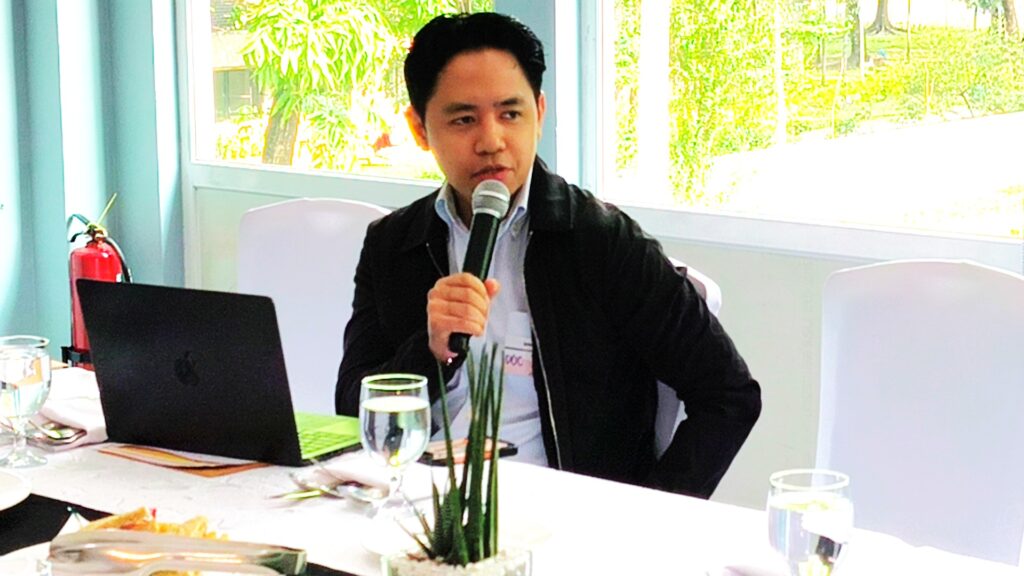
“Social reformulation is about making the environment healthier,” Dr. Theo Prudencio Juhani Z. Capeding, MD, MPM, MSc explained. “The burden should not be on the consumer. If someone cannot stop eating pancit canton, at least what they buy automatically has less sodium once we implement this policy.”
“Cost-effective measure is from individual intervention to population-level, or population-type of intervention, which can be seen at the primary healthcare or the BHWs, that is not really much strengthened,” Dr. Capeding added.
DOH Programs Already Testing Ground-Level Interventions
The DOH has piloted the PHILPEN program (Philippine Package of Essential Noncommunicable Disease Interventions), adapted from the WHO, in Western Visayas under the name “Healthy Hearts.” The program trains barangay health workers to conduct simple screenings—taking blood pressure, height, and weight—to compute BMI and stratify patient risk.
The initiative is set to expand to Region 2 (Cagayan Valley) by 2026 or 2028, with early data showing that up to 70 percent of patients achieve blood pressure control when the full package is implemented.
The Quezon City calorie labeling ordinance was cited as an example of policies that encourage food businesses to reformulate without mandating it directly.
Multi-Sectoral Approach Needed
Dr. Aquino emphasized that the health sector cannot solve the problem alone, calling for engagement with the Department of Agriculture, Department of Trade and Industry, and other sectors. He noted that addressing salt intake must be paired with initiatives promoting physical activity, road safety, and access to healthy food.
A Call for Comprehensive Policies
Experts stressed that sodium reformulation is not a “silver bullet” and must be complemented by other measures, including front-of-package warning labels, restrictions on marketing unhealthy food to children, and government feeding program reforms.
Dr. Jane Eflyn Lardizabal-Bunyi, Hypertension Specialist of the Philippine Society of Hypertension, said that mandating fast food chains to reformulate salt in their products would be a “challenge,” noting that some countries in Europe are even incentivizing food companies who reformulate sodium in their products.
“We need to start somewhere,” a panelist concluded. “It’s good that we’re talking about these things now. Before, we didn’t consider chronic kidney disease a real problem. It was just normal for friends and family to have hypertension.”
Legislative Action Underway
House Bill No. 6334 and House Bill No. 2660 are among the measures filed addressing sodium reformulation. Rep. Andrew Julian Romualdez is the principal author of House Bill 7666. Rep. Nathaniel “Atty. Nat” M. Oducado of the 1Tahanan Party-list is a principal author of House Bill No. 2660.
In his message read during the event, Rep. Carlos Andes Loria said: “Sodium reformulation is not merely a health intervention—it is a national imperative.”
“The financial impact alone is staggering. In the first half of 2025, the government spent P28 billion on dialysis treatments, a direct consequence of chronic kidney disease—one of the many outcomes of excessive sodium intake. Behind each peso spent is a Filipino who has suffered too long, a family pushed into financial vulnerability, and a nation forced to allocate scarce resources to cure what could have been prevented,” Rep. said.
“For decades, the responsibility of healthy eating has rested unfairly on individuals, even as pre-packaged and processed foods quietly exceed global sodium benchmarks, shaping consumption patterns long before a Filipino decides what to eat. Sodium reformulation changes this paradigm. It shifts the burden from the consumer to the institutions that shape our food environment—from individual willpower to collective accountability,” he added.
“Let us reshape our food landscape so future generations inherit not a health crisis, but a healthier, stronger, and more resilient Philippines,” Rep. Loria said.
The event concluded with a message from Representative Loria, read by Corpuz, thanking participants and reaffirming legislative commitment to advancing the sodium reformulation bill.#