As China finalizes its ambitious 15th Five-Year Plan (FYP) for 2026-2030, a leading Philippine geopolitical think tank is warning that Manila’s current trajectory is leading it onto the “wrong bus,” potentially costing the country billions in economic opportunities.

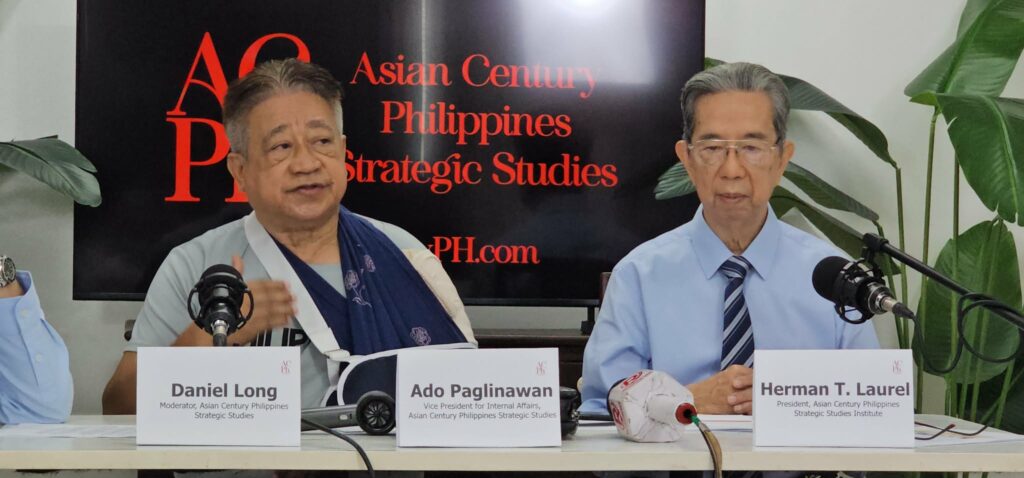
During a media forum on Wednesday, the Asian Century Philippines Strategic Studies Institute (ACPSSI) presented a stark analysis of China’s recently concluded “Two Sessions,” urging the Philippine government to repair ties with Beijing and actively position itself to benefit from the world’s second-largest economy’s next development phase.
The Two Sessions: A Blueprint for Technology Primacy
The 2026 Two Sessions, held in Beijing’s Great Hall of the People, brought together over 2,000 political advisers and were covered by more than 3,000 journalists. The core outcome was the formal approval of the 15th FYP, a document described by Dr. Li Zhi of Tsinghua University as a unique macroeconomic instrument and “an invitation letter to the world.”
According to Dr. Henry Chan, a contributor to the ACPSSI forum, the sessions highlighted a definitive shift in China’s economic paradigm. Key targets for 2026 include a GDP growth target of 4.5%-5%, the creation of 12 million new urban jobs, and a surveyed urban unemployment rate target of 5.5%.
However, the strategic emphasis is on “new quality productive forces”—a concept prioritizing innovation, advanced industries, and green development over traditional labor or resource-intensive models. Dr. Chan noted the “notable” technology primacy in the 15th FYP, with China committing to increase R&D spending by at least 7% annually. There is a growing national confidence in moving toward genuine “zero-to-one” innovation, creating entirely new industries rather than scaling existing ones.
“The two sessions provided an important forum to understand more about China, which is the most important thing to watch,” Dr. Chan stated. He emphasized that “policy continuity is very important. Continuity and pragmatism are behind China’s Five-Year Plan.”
The Cost of “Riding the Wrong Bus”
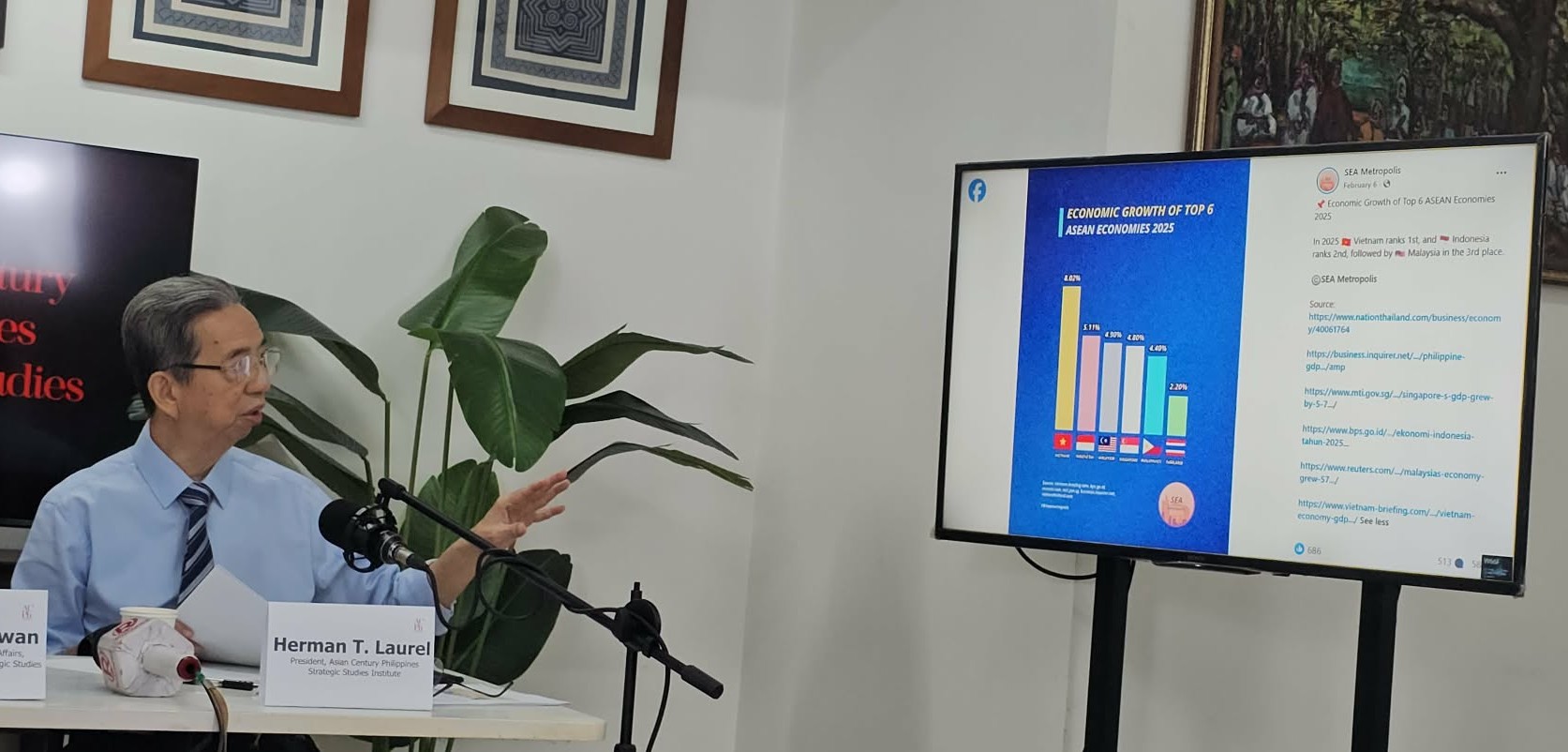
While China charts its course “North” toward technological and green leadership, ACPSSI President Herman “Ka Mentong” Tiu Laurel argued that the Philippines is heading “South,” driven by a foreign policy pivot back toward the United States.
Laurel pointed to the administration of President Ferdinand “Bongbong” R. Marcos, Jr., which he said “overturned” the independent foreign policy of former President Rodrigo Duterte due to “American intervention.” He identified this shift as the “root problem” of the Philippines’ current economic challenges.
Ado Paglinawan, ACPSSI Vice President for Internal Affairs, delivered a sharp critique, stating, “Fortunately, China is going North and the Philippines is going South. We are riding in a wrong bus.” He quantified the cost of this strategic misalignment, alleging that by signing four additional EDCA (Enhanced Defense Cooperation Agreement) sites with the U.S., the Philippines has effectively “embargoed” or abandoned significant Chinese investments.
“We have US$23 Billion economic opportunities plus US$17 Billion, which means US$40 Billion economic opportunities which they have embargoed,” Paglinawan claimed, adding that the government has focused excessively on defense and security “and they forgot the economy.” He contrasted this with domestic issues, highlighting alleged corruption in flood control projects.
Paglinawan also linked the foreign policy shift to declining tourism, noting that due to low foreign tourist arrivals in 2025, Department of Tourism Secretary Christina Garcia Frasco lost her post. He expressed concern that President Marcos has no clear “Plan A or Plan B” amidst the escalating Middle East crisis and global uncertainty.
Concrete Opportunities in China’s Plan
The ACPSSI panel outlined specific opportunities within the 15th FYP that the Philippines could pursue.
1. Green Energy and the Belt and Road Initiative (BRI): Laurel highlighted the “upgraded high-quality Belt and Road Initiative” as a key opportunity. He cited Chinese-built wind projects in Kenya, which provide locals with cheaper and more stable energy, and questioned why the Philippines isn’t pursuing similar solar power projects in joint ventures with China. China’s experience in building solar plants on deserts can help address energy needs.
2. Agricultural Market Access: Echoing points made by Dr. Li Zhi, the forum noted that China’s massive domestic market is opening wider. The 15th FYP includes expanded zero-tariff treatment for developing countries, which could allow Philippine agricultural products—from bananas to high-value processed goods—to reach Chinese consumers more competitively.
3. Technology and Demographics: Dr. Chan pointed to the aging demographic challenge, noting that the average age of the Philippine agricultural labor force is 58. While he cautioned that “China is not going to help you in fertilizer,” he suggested that Filipino farmers must engage in greater agricultural literacy. However, he also noted the potential for technology exchange, particularly in areas like automation and smart systems that could modernize Philippine industries.
A Call for Pragmatism and Survival
The ACPSSI forum concluded with a call for a pragmatic reset in Philippine foreign policy. Dr. Chan emphasized that “with 120 million population, the Philippines is too big to help. Go out for China’s help. People-to-people exchange has to be emphasized.”
He stressed that the Middle East crisis and global instability have left China as one of the least affected major economies, making engagement with Beijing a matter of practical necessity. “We cannot have motherhood statements here. I think we should have specifics,” Dr. Chan urged.
Laurel and Paglinawan framed the choice in existential terms. With the activation of the Bilateral Consultative Mechanism (BCM) on the West Philippine Sea dispute cited as “good news,” the think tank leaders argued that the path forward requires a genuine policy shift.
“There’s got to be a real change,” Paglinawan said. “Stop the dirty tricks… We are in a crisis. This is now a question of national survival.”
As China’s 15th Five-Year Plan unfolds, the message from the ACPSSI to Manila is clear: the train of Asian economic integration is leaving the station, and the Philippines must decide whether to get on board.#