
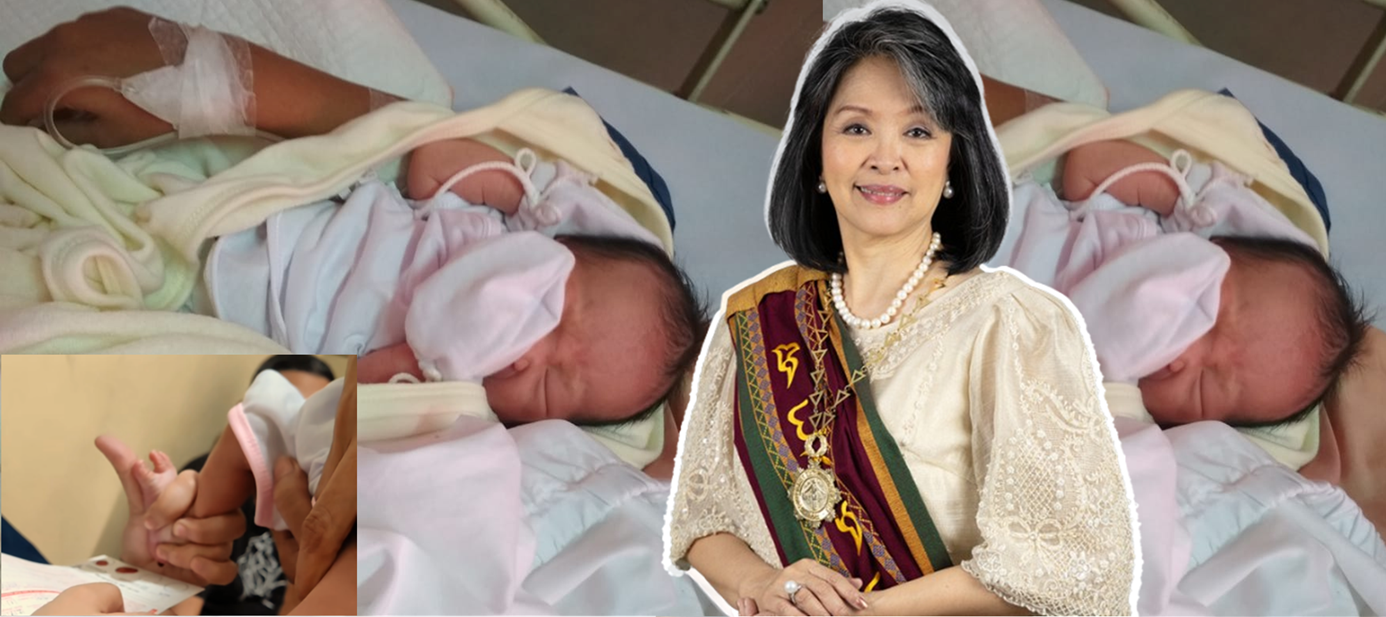
A simple, nearly painless procedure—a prick on a newborn’s heel—has become a silent revolution in Philippine public health, saving over 300,000 children from severe disability or death. At the heart of this life-saving national program is National Scientist Dr. Carmencita M. David-Padilla, a clinical geneticist and pediatrician whose decades of work have redefined the nation’s approach to preventive medicine and genetic healthcare.


On August 31, 2023, President Ferdinand Marcos Jr. conferred upon Dr. Padilla the Order of National Scientist, the Philippines’ highest academic title, cementing her status as the architect of the country’s groundbreaking Newborn Screening System (NBS).
The Foundation: From Data to Law
Dr. Padilla’s mission began in earnest in 1996 with a modest data-gathering project in Metro Manila, screening just 500 infants. The results were a clarion call: conditions like congenital hypothyroidism and G6PD deficiency, which are treatable if caught early, were prevalent yet largely undetected. A cum laude graduate of UP Diliman (BS Pre-Medicine, 1976) and the UP College of Medicine (1981), and a fellow in Clinical Genetics from Australia, she returned not for prestige but to build an affordable, accessible system.
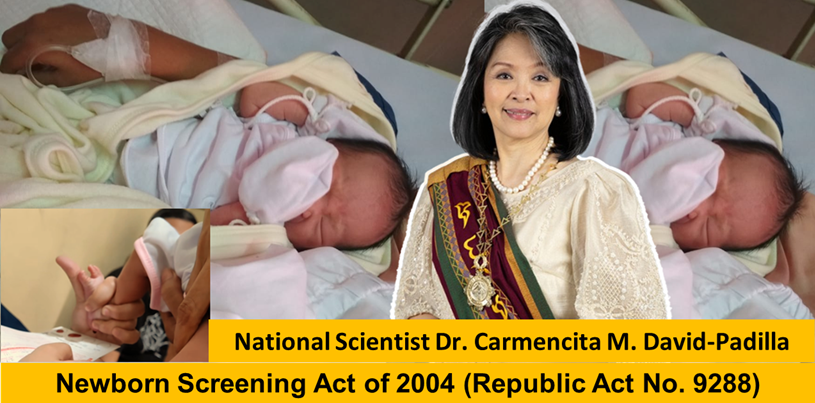
Her research provided the irrefutable evidence needed to drive policy. She is directly responsible for crafting the Newborn Screening Act of 2004 (Republic Act No. 9288), which institutionalized the NBS into the national healthcare framework. From a pilot project, it expanded nationwide. Her policy work continued as she lobbied for and helped draft the Rare Diseases Act of 2016 (Republic Act No. 10747).

The Scale of Impact


Today, the numbers speak to a monumental success. Over 92% of all Filipino newborns undergo screening, which can detect 29 serious but manageable conditions. This systematic, simple intervention has granted hundreds of thousands of children the chance at a normal, healthy life.
A Life of Leadership and Recognition
Dr. Padilla’s influence is amplified through a tapestry of leadership roles. She is a Professor of Pediatrics at the UP Manila College of Medicine and concurrently holds several key national positions: Executive Director of the Philippine Genome Center, UP System; Director of the Newborn Screening Reference Center at the NIH-UP Manila; and Interim Director of the Institute of Health Innovation and Translational Medicine.
Her exceptional career has been recognized with numerous accolades. She was named one of the 100 Most Influential Filipina Women in the World (2013) and has received top national awards including the Dr. Paulo C. Campos Award for Medical Research (2013), Outstanding Filipino Physician (2007), and the Outstanding Health Research Award (2010). In 2008, she was conferred as an Academician of the National Academy of Science and Technology. Her scholarly impact is documented in over 100 publications, ranging from original research to vital training modules.
Building an Ecosystem for Genetic Medicine
Dr. Padilla’s vision extended far beyond a single screening program. She understood that sustainable change required institutional foundations. As early as 1990, she helped establish a genetic services department at UP Manila. She later aided in founding clinical genetics units at the Philippine General Hospital.
A pivotal achievement was her instrumental role in establishing the Philippine Genome Center (PGC) in 2009, which she now leads as Executive Director, positioning the Philippines at the forefront of genomic research.
Global Recognition and Enduring Principle
In 2025, the prestigious journal Nature highlighted the Philippine Newborn Screening Program as a global model for equitable healthcare in low- and middle-income countries—a testament to the system’s design, which Padilla tirelessly championed.
For Dr. Padilla, the greatest reward is not in trophies or titles, but in the principle that every child deserves an equal chance to live a full life. Her legacy is etched not in stone, but in the robust health of a generation, the strength of national institutions she helped build, and a powerful idea: that science, when coupled with compassionate policy and unwavering determination, can perform quiet miracles—one heel prick at a time.#