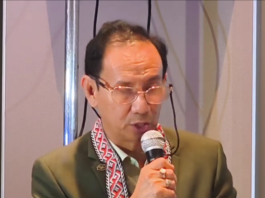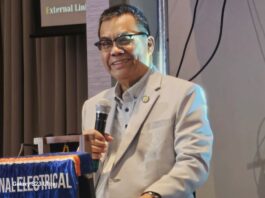

In a revealing exclusive interview, leaders of the Philippine Institute of Civil Engineers (PICE) Quezon City Chapter disclosed that numerous national flood control projects were implemented without local government coordination or adherence to the city’s master plan, exacerbating flooding in the metro.
Speaking on the “Tuklasin Natin” program, the engineers identified poor coordination, lack of pre-audits, and improper construction as key failures, while urging immediate community discipline and systemic reform.
Flood Control Projects Violated Master Plan, Worsened Flooding:
Engineer Paul Lazarte, PICE Quezon City President, reported that inspections of over 332 DPWH flood control projects revealed critical non-compliance. A major issue was the construction of new walls inside old riprap, effectively narrowing waterways like Talayan Creek and increasing flood risk. “Instead of helping, it added to the problem,” Lazarte stated. He emphasized that many projects were built without the Quezon City Government’s knowledge, lacking alignment with the official Drainage Master Plan developed by the UP Resilience Institute.
Critical Systemic Failures Identified:
- Lack of Coordination: DPWH projects often proceeded without notifying the Local Government Unit (LGU), leaving city engineers in the dark. Engineer Gresil Damo of DPWH acknowledged that while his Pasig-Marikina project was coordinated, “of course, there are projects that are uncoordinated.”
- Absence of Pre-Audit: Engineer James Angel of the Commission on Audit (COA) confirmed that only post-audits are conducted, a practice since 2013. Host Cathy Cruz questioned this, suggesting the lack of pre-audit enables the abuse of projects.
- Encroachment & Garbage: Engineers identified informal settlers narrowing easements and indiscriminate garbage disposal as primary, human-caused reasons for rapid flooding. The mandated 3-meter easement from riverbanks is largely violated.
Recommended Engineering Solutions:
The panel proposed specific interventions:
- Structural: Construction of floodgates/water gates (e.g., for Talayan Creek), widening and deepening of channels, and building pumping stations (currently, Quezon City has none operating).
- Non-Structural: Accelerated construction of detention ponds (like the 600-cubic-meter pond in Quezon Memorial Circle) and relocation of informal settlers to city housing projects to reclaim waterways.
Climate Change and Faulty Standards Worsen Crisis:
Engineers noted that climate change is causing more intense, short-duration rainfall, overwhelming old designs. Dr. Chris Monjardin explained that drainage must be designed for “return periods” (e.g., a 100-year storm), but many projects fail this standard. He also clarified there is no universal width standard; design depends on hydraulic studies.
Call for Community Action and Integrity:
A recurring theme was the need for public discipline. “By throwing garbage in the creek… the water level will be affected. It’s a very important thing for the community,” Lazarte urged. The host, Cathy Cruz, underscored that the “root of everything… is discipline” and “integrity” among both citizens and officials, calling corruption a fundamental problem enabling poor projects.
PICE is the accredited national organization for civil engineers, established in 1974. The Quezon City Chapter has about 5,000 members across government and private sector sub-chapters.

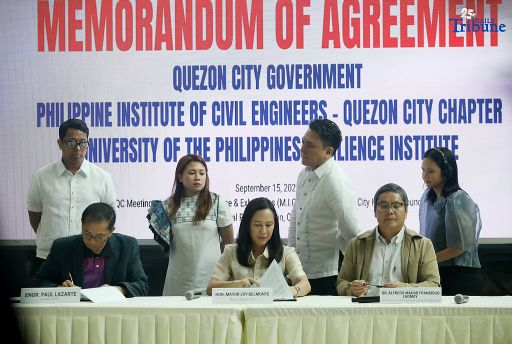
The chapter has a tripartite MOA with the Quezon City LGU and UP Resilience Institute to audit flood control projects for master plan compliance.
The resource speakers of Tuklasin Natin was participated by multiple engineers from various sectors namely: Dr. Cris Edward Monjardin (Drainage Master Plan); Engineer Grecile Damo (DPWH, Pasig-Marikina River Project); Engineer Sherwin Usman (Quezon City Engineering Office); Engineer James Angel (COA); Engineer Maribel Martirez (PNP Engineering Brigade). Their roles highlight the multi-sectoral collaboration needed for effective infrastructure and flood management.
The interview also covered PICE membership and the roles of civil engineers in various agencies. The engineers invited the public to contact PICE via social media or SMS for engagement. The program ended with a call for unified action to address the flooding crisis through technical expertise, proper governance, and civic responsibility.#