MANILA, Philippines – In a unified and urgent call to action, healthcare leaders, government officials, and patient advocates converged at the ASPIRE Lung Summit on Thursday, November 27, at the Rizal Park Hotel, demanding a comprehensive PhilHealth Lung Cancer Benefit Package to address the country’s deadliest cancer.
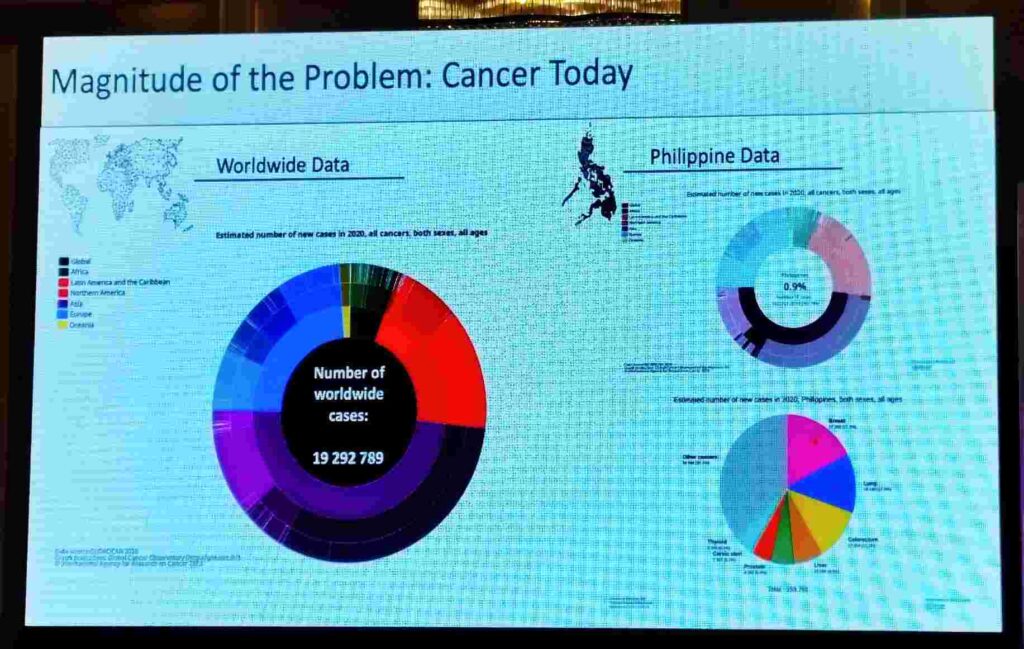
Coinciding with Lung Cancer Awareness Month and hosted by broadcast journalist Nina Corpuz, the summit, titled “Philippine Declaration on Lung Cancer Diagnostics and Treatment Access,” highlighted the stark reality that lung cancer claims over 23,000 Filipino lives annually. Stakeholders emphasized that early detection, accurate diagnosis, and access to modern treatment remain out of reach for many due to high costs and systemic gaps.
A National Crisis Demanding a Unified Response
In his opening remarks, Engr. Emer Rojas, President of the Lung Health Alliance Philippines (LungHAP), revealed that lung cancer alone accounted for 18.5% of all cancer deaths in the country in 2022. “Behind every number is a family, a story, a life cut short, many of them preventable,” he stated.
Rojas stressed that overcoming this crisis requires a “whole-of-government and whole-of-society approach to fundamentally reshape how we confront lung cancer.” He identified expanded PhilHealth coverage as a critical linchpin in making life-saving care accessible and announced the collective launch of the Philippine Declaration on Lung Cancer, a tangible roadmap to “dramatically reducing lung cancer deaths in the Philippines.” He ended with a powerful plea: “Let us make lung cancer a national priority today.”
Echoing this sentiment, Atty. Arnel Mateo, Chairman of LungHAP, welcomed the esteemed gathering of leaders and advocates, calling the forum “a powerful statement about our shared resolve.” He acknowledged key legislative champions present, including Senator JV Ejercito, author of the Universal Health Care Law, and Senator Pia Cayetano, a key advocate for the Graphic Health Warning Law.
Government Champions Pledge Support and Action
In a video message, Senator Risa Hontiveros, Chair of the Senate Committee on Health, recognized lung cancer as one of the hardest diseases to treat and underscored the importance of the proposed PhilHealth package in easing the patient burden. She cited the Universal Health Care Act and the National Integrated Cancer Control Act (NICCA) as existing frameworks that must now be fully operationalized through stronger access programs.
On the House of Representatives’ side, Congressman Ciriaco Gato, Chair of the House Committee on Health, proposed concrete steps forward, including the establishment of Specialty and Advanced Specialty Centers for Lung Health and Cancer to improve early detection nationwide. He noted that seven House Bills have already been filed to bolster early detection in government hospitals and reiterated the need to strengthen NICCA to ensure PhilHealth coverage meets patient needs across the entire care continuum.
Bridging Medical Innovation and Patient Access
Dr. Kenneth Samala, a medical oncologist, framed proper cancer care as a structured process, “like the steps taken in constructing a building,” requiring strong foundations and adequate resources. “Each and every journey of the Filipino cancer patient should be supported by the government,” Dr. Samala asserted, pointing to expanded PhilHealth programs like the YAKAP Package as positive models.
He emphasized that advancements in targeted therapy, immunotherapy, and biomarker-guided treatment offer new hope for survival. However, he cautioned that these innovations will only benefit Filipino patients if diagnostic access and PhilHealth reimbursement keep pace.
A Five-Pillar Roadmap for the Future
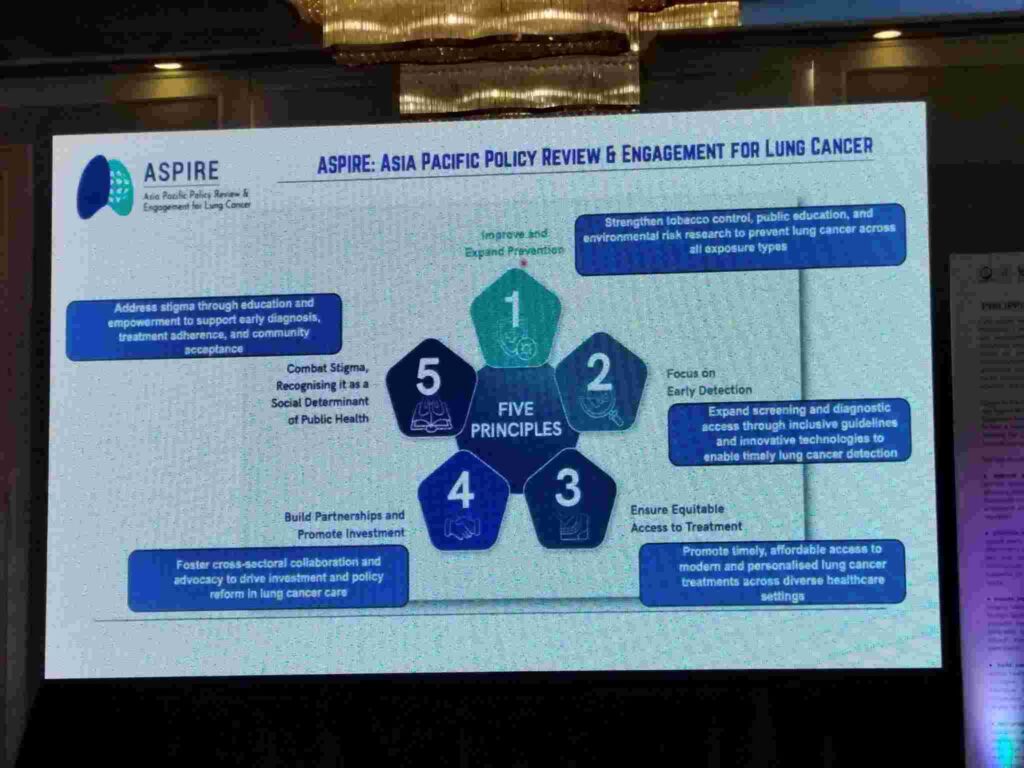
The summit was aligned with the Asia-Pacific Lung Cancer Policy Consensus, which outlines five guiding pillars:
- Prevention through stronger tobacco control and mitigation of environmental risks.
- Early Detection by expanding screening guidelines and investing in diagnostic tools like low-dose CT scans.
- Equitable Access to treatment through faster approvals, broader reimbursement, and sustainable financing.
- Partnerships across sectors to deliver integrated strategies.
- Stigma Reduction through education, as 20% of lung cancer cases occur in never-smokers.
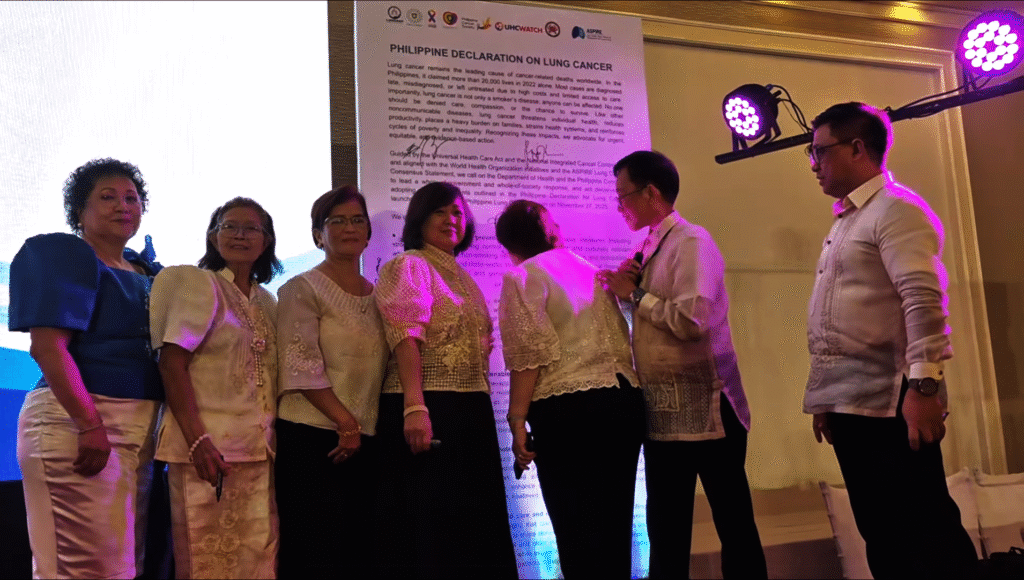
These principles form the backbone of the newly launched Philippine Declaration on Lung Cancer, which seeks to localize this regional framework to the specific realities and gaps in the Philippine healthcare system.
The event culminated in the signing of the declaration—a unified pledge from all sectors to expand early detection, strengthen treatment access, and ensure that PhilHealth plays a central role in making lung cancer “detectable, treatable, and ultimately conquerable for all Filipinos.”#