
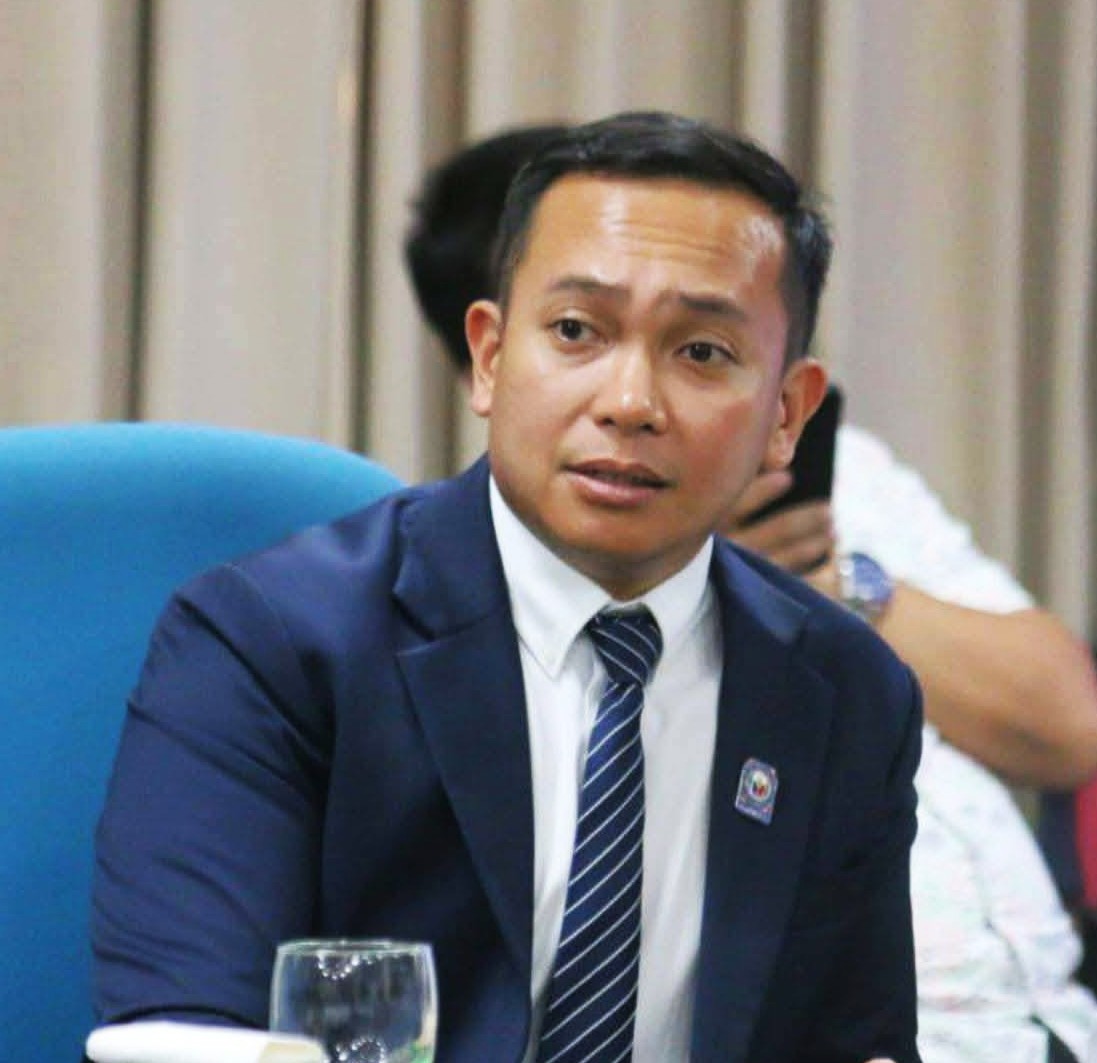
As oil prices and basic commodity costs continue to rise, a party-list lawmaker has filed a measure seeking to strengthen small businesses and community-based organizations as a strategy to reduce poverty in the Philippines.
Representative Nathaniel “Atty. Nat” M. Oducado of the 1Tahanan Partylist introduced House Bill No. 8745, or the “Poverty Reduction through Social Entrepreneurship Act,” which creates the PRESENT Program designed to provide small and community-based enterprises with access to funding, training, and markets.
“Many Filipinos remain poor not because they lack diligence, but because they lack opportunities to earn,” Oducado said in a statement on April 1, 2026. “We need to strengthen small businesses and cooperatives so they can generate jobs in their communities, especially during times of crisis.”
The bill proposes an initial P3 billion Social Enterprise Development Fund (SEDF) to be administered by a newly created Social Enterprise Development Council (SEDC) under the Department of Trade and Industry (DTI).
Qualified social enterprises — defined as mission-driven organizations that create wealth while contributing to social well-being and ecological sustainability — would gain access to:
- A mandatory credit allocation requiring banks to set aside at least 2% of their total loan portfolio for social enterprises
- A special credit window with interest rates lower than market rates and longer payment terms
- Grant facilities for capacity-building, start-up needs, and ecosystem development
- Tax credits based on social, economic, and ecological contributions
The measure also creates a Social Enterprise Guarantee Fund Pool (SEGFP) , funded by 5% of the preceding year’s budget surplus from government-owned and controlled corporations, to mitigate lending risks.
One of the bill’s most significant provisions grants qualified social enterprises preferential rights in government procurement.
Under the proposed measure, social enterprises would be entitled to at least 20% of the total annual procurement value of goods and services supplied to the government. The Department of Budget and Management would be required to direct line agencies to allocate at least 10% of their Maintenance and Other Operating Expenses and Capital Outlay specifically for goods and services procured from social enterprises.
“Social value” — defined as additional benefits to society including poverty reduction, environmental conservation, climate action, and gender justice — would become a factor in government procurement decisions.
The bill provides a detailed definition of a Social Enterprise with Marginalized as Primary Stakeholders (SEMPS) . To qualify for benefits and incentives, a social enterprise must:
- Invest at least 51% of its surplus or profits to assist poor and marginalized sectors
- Pursue proactive solutions to social and environmental problems
- Distribute a substantive part of wealth created to poor communities
- Comply with labor standards under the Labor Code
For stock corporations, partnerships, or sole proprietorships, the bill requires that at least 60% of net revenues be reinvested to sustain their social mission. Such enterprises cannot be branches, subsidiaries, or divisions of private business enterprises.
Social enterprises that have not yet achieved financial sustainability may still qualify for incentives by presenting a workable strategy to achieve sustainability over a reasonable period.
The SEDC would be chaired by the DTI Secretary, with the Agriculture Secretary as co-chairperson, and would include nine representatives from social enterprises themselves — three each from Luzon, Visayas, and Mindanao, with at least one woman per island group.
The bill also mandates the integration of social entrepreneurship content into school curricula at secondary and tertiary levels through the Department of Education and the Commission on Higher Education. Out-of-school youth and adults would be covered by a continuing education program.
Local government units are enjoined to incorporate social enterprise development plans into their local development planning, with Gender and Development funds potentially used for implementation.
The bill imposes penalties for non-compliance. Any person who, intentionally or through gross negligence, fails to provide benefits, rights, or incentives granted to social enterprises faces imprisonment of six months to two years, a fine of up to P250,000, or both.
Government officials or employees found violating the provisions would be terminated from service with forfeiture of benefits. Corporations falsely representing themselves as social enterprises would be required to pay double the benefits they reaped from the program, with officers facing fines of P500,000 and imprisonment of up to two years.
Banking and lending institutions that fail to provide the mandatory credit allocation face administrative sanctions including a fine of not less than P500,000.
According to the bill’s explanatory note, national poverty incidence stood at 15.5% in 2023, representing approximately 17.5 million Filipinos. The government, through NEDA, aims to reduce poverty incidence to 10-11% by 2027 and 8-9% by 2028 under the Philippine Development Plan 2023-2028.
The government has allocated P1.5 billion for microfinancing support under the Pondo sa Pagbabago at Pag-Asenso (P3) program for fiscal year 2026 — a three-fold increase from 2025 levels.
The bill affirms the State’s commitment to the Sustainable Development Goals, particularly zero poverty, no hunger, gender equality, decent work and inclusive economic growth, reducing inequalities, and sustainable production and consumption.
The measure requires the DTI to promulgate implementing rules and regulations within 90 days from effectivity. A Joint Congressional Oversight Committee would conduct a sunset review within six years to evaluate the law’s impact, accomplishments, and agency performance.
The bill takes effect 15 days after publication in the Official Gazette or in two newspapers of general circulation.#