
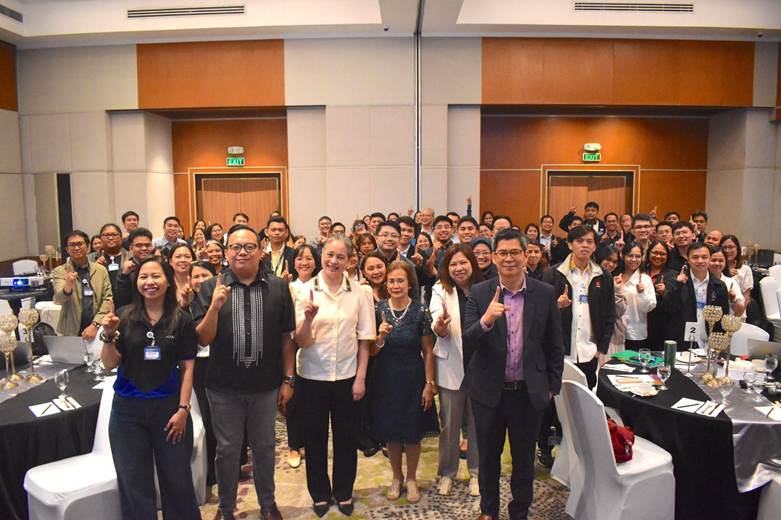
The Department of Science and Technology (DOST) is advancing efforts to strengthen data governance across its system following a three-day training and workshop that laid the groundwork for a department-wide framework to promote data accessibility, accountability, and data-driven decision-making.
The initiative, which ran from March 2 to 4, 2026, in Quezon City, gathered technical personnel from across the DOST system to build a shared understanding of data governance principles in the public sector and collaboratively design the structure that will guide how the Department manages, shares, and protects its organizational data.
Framework Aims to End Data Silos
In a message delivered during the activity, DOST Undersecretary for Scientific and Technical Services Maridon O. Sahagun emphasized that the initiative marks an important step in breaking down data silos and strengthening integration, interoperability, and collaboration across DOST agencies and offices.
“Data governance is the foundation of a data-driven public sector. This activity is a strategic step toward conceptualizing a DOST-wide Data Governance Framework that will promote interoperability, security, and accountability within the DOST system,” Sahagun said. “It will ensure that our vision of a data-driven and geospatially intelligent DOST becomes a shared and operational reality.”
Experts Lead Training on Data Sharing, AI Integration
A group of experts on data governance and the use of artificial intelligence in government led the three-day activity. Dr. Ruel V. Maningas, an academician and international consultant in information systems, technology, and business analytics, introduced participants to core principles of data governance and the roles and responsibilities necessary for implementing it within organizations.
Mr. Monchito Ibrahim, Executive Member of the National Innovation Council and former Undersecretary of the Department of Information and Communications Technology, discussed the fundamentals of data sharing and integration, including interoperability, data standards, and challenges government institutions face in exchanging data. He also presented case examples and best practices.
Meanwhile, Mr. Dominic “Doc” Ligot, a technologist, data analyst, and entrepreneur known for his work in ethical AI and data analytics for social impact, guided participants in conceptualizing the DOST Data Governance Framework using the design thinking approach. The session also included a lecture on the use of data and AI in public governance delivered by data and AI strategist Ms. Danielle Dalisay.
Workshop Outputs to Shape Department Policy
Participants were guided in the conceptualization of a Technical Working Group (TWG) on data governance initiatives through a workshop facilitated by GATES Policy Specialist Mr. Marl Francis O. Manzano.
Outputs from the training will contribute to the development of the DOST Data Governance Framework, which will serve as the basis for the Department’s Data Governance Policy. It will also inform the recommendation for forming a TWG that will help guide how data across the DOST system is managed, used, shared, and protected.
GATES Program Leads the Charge
The initiative was led by the Geospatial Analytics and Technology Solutions (GATES) Program, a banner research and development program of the DOST under its ELEV8PH initiative. GATES harmonizes the Department’s geospatial datasets and harnesses geospatial analytics and artificial intelligence for science-based planning, research, and innovation.
The GATES Program is one of the avenues through which the DOST seeks to establish clear governance structures to ensure data quality, interoperability, security, and accountability across the Department. By strengthening its data governance practices, the Department aims to generate greater value from its datasets, support evidence-based decision-making, and enable more responsive science and technology services for the Filipino people.
The initiative is part of the DOST’s broader efforts to provide science-based, innovative, and inclusive solutions across four strategic pillars: human well-being, wealth creation, wealth protection, and sustainability. These pillars embody the mantra OneDOST4U: Solutions and Opportunities for All.
For more information, visit www.dost.gov.ph.