
The Department of Foreign Affairs (DFA) expressed confidence on Thursday that China will not impose fuel export restrictions on the Philippines, even as tensions persist in the West Philippine Sea and the Middle East conflict disrupts global energy supplies.

Foreign Affairs Secretary Tessa Lazaro dismissed concerns over potential supply curbs, citing the ongoing negotiations between ASEAN and China on a Code of Conduct (COC) in the South China Sea.
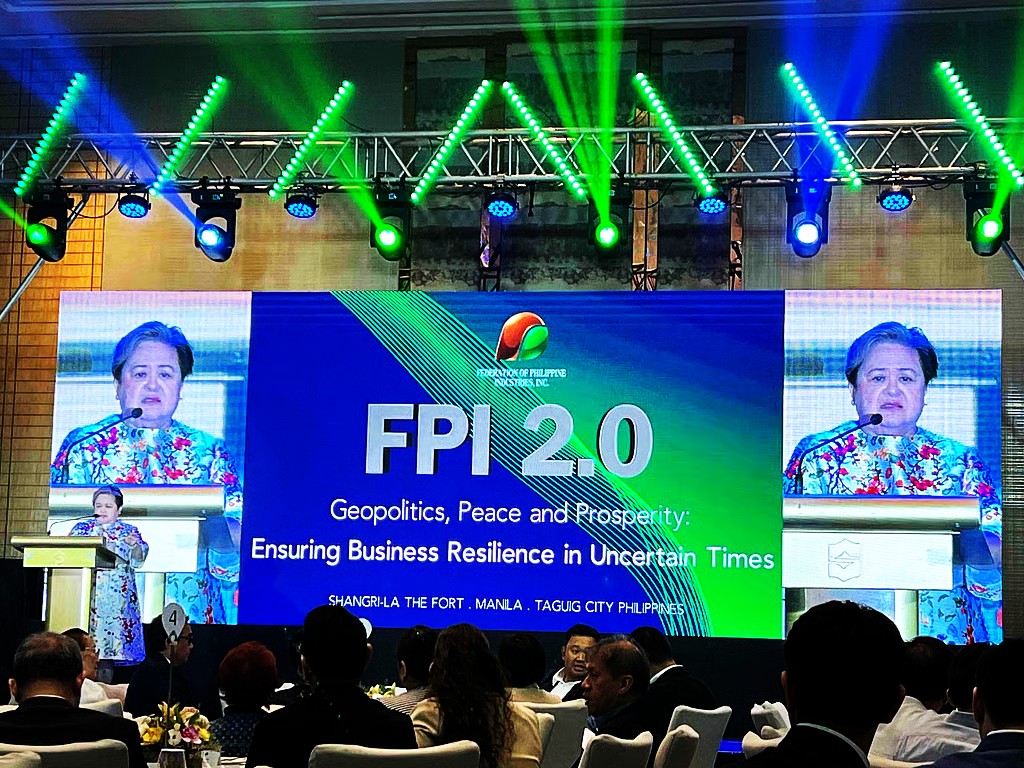
“With the negotiations ongoing on the Code of Conduct between ASEAN and China, I don’t think so. I am very forward-looking. There are still a lot of good discussions,” Lazaro said in an ambush interview on the sidelines of the Federation of Philippine Industries 2.0 forum in Taguig City.
Her remarks came after China, along with other nations, announced plans to restrict fuel exports starting March 2026 to secure domestic supply amid the escalating war in the Middle East, including the closure of the Strait of Hormuz—a vital chokepoint for global oil shipments.
While the Philippines is not heavily dependent on China for crude oil, it relies on China and other regional hubs such as Singapore and South Korea for refined petroleum products. Any disruption in those supply chains could pose a significant challenge to the country’s fuel security.
Government Moves to Secure Alternative Fuel Sources
The government has been racing to secure alternative energy supplies as the country’s fuel buffer stock is projected to last only until the end of April. President Ferdinand Marcos Jr. has directed the DFA and the Department of Energy (DOE) to explore other sources.
Lazaro said she convened an emergency meeting of ASEAN foreign ministers, during which members called for de-escalation of tensions in the Middle East and emphasized the use of diplomacy. She added that ASEAN energy ministers had previously agreed on an emergency mechanism that would be activated once supply disruptions reach a certain threshold, with the DOE already aware of the arrangement.
The DFA has also instructed Philippine embassies abroad to coordinate with host governments to explore possible fuel supply arrangements.
“I have instructed selected Foreign Service Posts and our ambassadors to engage their counterparts and ministries of energy to determine how they can assist us in this endeavor,” Lazaro said.
Marcos: Government Cushioning Impact of Rising Oil Prices
President Ferdinand Marcos Jr. assured the public that the government is taking steps to mitigate the impact of rising oil prices, including exploring additional subsidies and assistance.
“We are trying to find different methods to provide subsidies and assistance,” Marcos said in an ambush interview in Mariveles, Bataan. He acknowledged that volatile oil prices have made it difficult to plan interventions, but assured that the government is continuously adjusting.
Despite global supply uncertainties, Marcos said oil and food supplies in the country remain sufficient. “As much as possible, people should not worry. We are securing the supply of oil and food, and so far, our stocks are sufficient,” he said.
The President also reiterated efforts to diversify energy sources beyond traditional Middle East markets and pledged continued support for sectors most affected by rising fuel prices, particularly transport workers.
COC Negotiations Seen as Key to Stable Relations
The Philippines is currently chairing ASEAN, and both the regional bloc and China have committed to accelerating negotiations for a Code of Conduct in the South China Sea, with the goal of finalizing an agreement by 2026. Manila has consistently pushed for a COC that is “substantive and effective” and in line with international law, particularly the United Nations Convention on the Law of the Sea (UNCLOS).#