

A 17-Year Oversight Leads to a Diplomatic Showdown Between the United States and the Netherlands Over a Palm-Covered Speck in the Pacific.
In the years following the United States’ acquisition of the Philippine Islands from Spain in 1899, a small, palm-covered island near the archipelago’s southeastern boundary slipped through the cracks of American administration. For 17 years, the government in Manila simply forgot about Las Palmas.
That oversight would eventually trigger an international controversy that spanned more than a decade, required arbitration at The Hague, and ultimately redrew the maps of Southeast Asia. The story of how a 400-ton coast guard cutter and its crew stumbled upon this diplomatic time bomb is one of the most remarkable episodes in Philippine colonial history.
THE STARTLING DISCOVERY
In 1915, Lieutenant Commander Francis E. Cross of the U.S. Naval Reserve took command of the Ranger, a Philippine Coast Guard cutter assigned to support the Philippine Constabulary in the District of Mindanao and Sulu. His superior, Colonel Peter E. Traub, U.S. Army, mentioned an intriguing destination during one of their planning sessions.
“There’s a place named Las Palmas that I’d like to see,” Traub said.
Cross had never heard of it.
Located approximately 70 miles off the southeast coast of Mindanao, Las Palmas appeared on maps as little more than a dot. According to the 1913 Philippine Islands Sailing Directions published by the U.S. Coast and Geodetic Survey, the island sat at approximately 5 degrees 35 minutes north latitude and 126 degrees 36 minutes east longitude—well within the territorial boundaries established when Spain ceded the Philippines to the United States. The same source noted that the island, sometimes called Palmas or Miangas, extended one mile east to west, rose to over 300 feet, was abundant with coconut trees, and was inhabited.
No American official had ever visited.
THE VOYAGE TO LAS PALMAS
After completing inspection tours along the Mindanao coast, the Ranger departed from Surigao and set course across the Pacific toward the mysterious island. The journey took them over the Philippine Deep—also known as the Mindanao Deep—where ocean depths plunge to over 6.5 miles, deeper than Mount Everest stands tall. The crew speculated about the volcanic origins of the island ahead, wondering if this lonely peak might one day succumb to the seismic forces that created it.
At dawn on their second day at sea, Cross and his watch officer took stellar observations that gave them an excellent navigational fix. Two hours later, precisely as expected, the lookout called out: “Land ahead, sir!”
Through binoculars, they could see palm trees rising from the horizon.
A HOSTILE RECEPTION
What the landing party encountered on the beach bore no resemblance to a friendly island welcome. A large crowd of dark-skinned natives had gathered, and their demeanor was anything but hospitable.
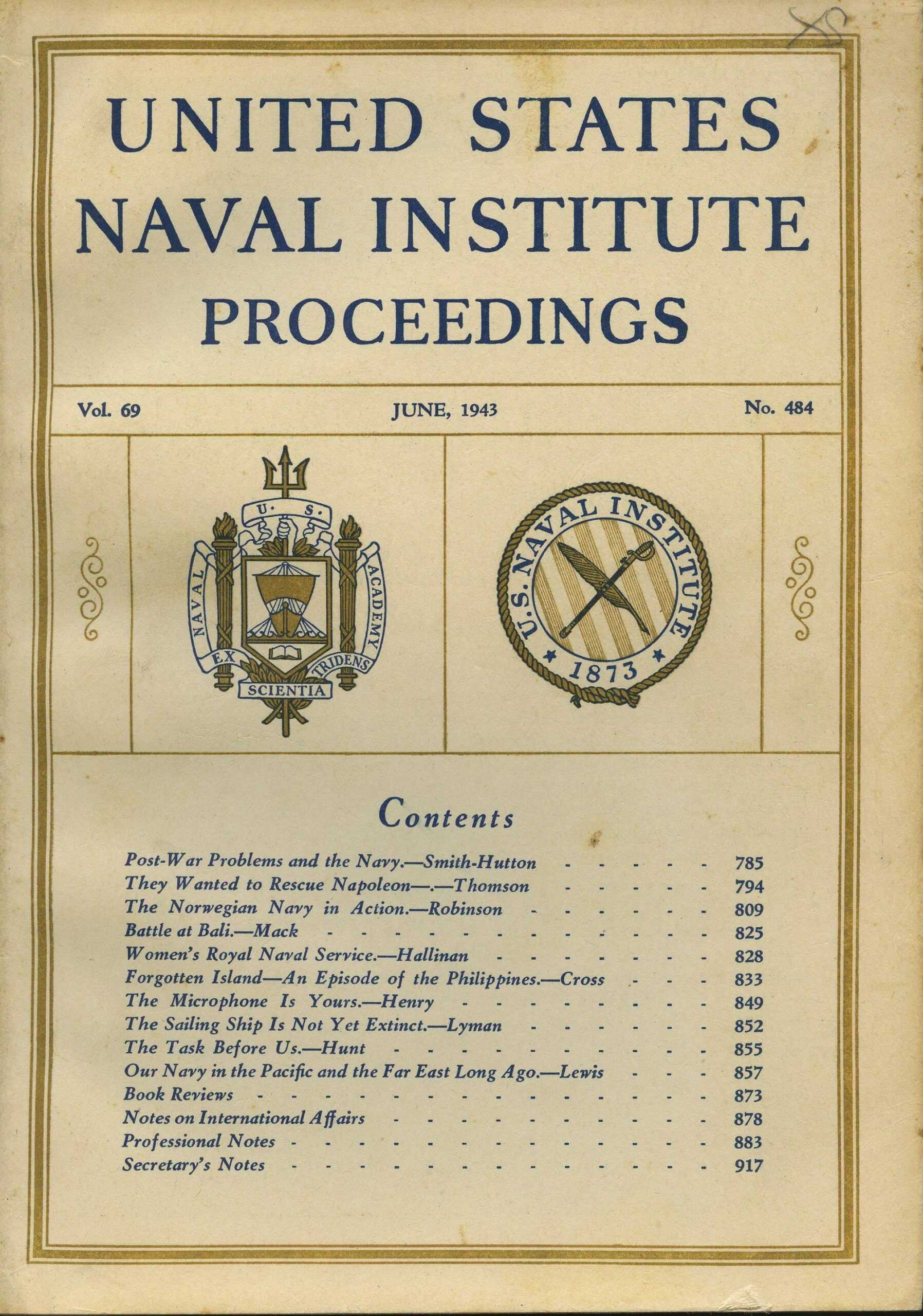
“Their manner toward us was cool and suspicious,” Cross later wrote in Proceedings magazine (Vol. 69/6/484). “On most of their faces distrust and fear were written, and a few showed truculence, if not defiance.”
The islanders spoke in a tongue that even the Filipino interpreter could not understand. They were racially distinct from other Philippine Islanders—taller, more sturdily built, with darker brown complexions—clearly Polynesian rather than Malayan or Mongolian in origin. Cross noted with surprise that the men wore blue dungaree trousers of cheap European manufacture, clothing utterly incongruous with their equatorial surroundings.
The situation grew more tense when the elderly Island Chief, later identified as Wyloo, pushed through the crowd. Naked above the waist and hatless, he launched into a long harangue in his incomprehensible dialect, making clear his disapproval of their landing and his suspicion of their intentions.
The situation seemed hopeless until a fisherman pushed forward and addressed them in Visayan—a Philippine dialect. Years earlier, he had been caught in a storm, drifted to Mindanao, and learned the language while recovering in a coastal village.
Through this interpreter, they finally understood what Chief Wyloo was saying: they were trespassers. And then came the word that would change everything:
“Hollandez!”
The island, Wyloo insisted, belonged to Holland.
THE DUTCH FLAG AND A CHIEF IN SPLENDOR
Despite the tension, Cross and Traub refused to retreat. They insisted on their official right to visit any island in the Philippine archipelago. Reluctantly, Wyloo led them inland through a dense grove of coconut palms—the island’s primary resource—past mats covered with copra (dried coconut meat) drying in the sun.
Then Cross spotted it: a flagpole with an emblem flying at its truck. As they drew nearer, a light breeze lifted the folds enough to reveal the broad red, white, and blue horizontal stripes of the Netherlands.
“The sight of the foreign ensign flying over the island… perplexed us,” Cross admitted. It was an eloquent confirmation of Wyloo’s claims, and both officers immediately understood the diplomatic implications.
The islanders’ hospitality improved once they reached a communal gathering place. Young men climbed palm trees to fetch fresh green coconuts, expertly lopping off ends to create drinking vessels filled with cool, clear nectar. But the true spectacle arrived when Chief Wyloo returned.
“Arrayed in all his glory,” Cross described, Wyloo wore a Dutch naval officer’s cast-off blue cap, resting askew on his head, and an old white uniform coat with half its brass buttons missing. Dangling down his chest was a faded college pennant—from the University of Maryland—fastened around his neck, bearing gold letters on a black field.
The fisherman had already mentioned that an American vessel had called at the island many years before. Now the evidence dangled from the chief’s neck.
A SCHOOL AND A SYSTEM
Further exploration revealed a small school where about 30 children were being taught by a Malay instructor—apparently employed by the Netherlands East Indian Government. The teacher’s cool discourtesy toward the American visitors reinforced their growing realization that this island operated under a foreign administration entirely separate from the Philippines.
The economic system confirmed it. When Cross attempted to pay for poorly woven mats with currency, the islanders refused—they had no concept of money as a medium of exchange. Instead, they wanted to barter for buttons, insignia, and other glittering objects from the Americans’ uniforms. The fisherman explained that a Dutch steamer called every four months to collect copra, the island’s only significant product, in exchange for manufactured goods.
Wyloo’s apparent duties became clear: he was required to protect the copra harvest for the Dutch vessel’s arrival. His suspicion of the Americans stemmed directly from instructions to prevent the island’s produce from falling into other hands.
THE AFTERMATH AND ARBITRATION
When Cross and Traub returned to Zamboanga, both submitted detailed reports to their respective bureaus in Manila. The incident quickly came to the attention of the U.S. State Department in Washington, triggering years of diplomatic correspondence between the United States and the Netherlands. Both nations claimed sovereignty over Las Palmas.
The dispute finally reached resolution in 1925 when both countries agreed to submit the matter to the Permanent Court of Arbitration at The Hague. On April 4, 1928, the tribunal issued its Arbitral Decision: Las Palmas—also known as Palmas or Miangas Island, situated at approximately 5 degrees 33 minutes north latitude and 126 degrees 35 minutes east longitude—belonged to the Netherlands.
The court’s reasoning rested on historical possession. The Netherlands had maintained continuous possession of the island since approximately 1700. Spain, and therefore the United States as Spain’s successor, had never acquired sovereignty over it.
LEGACY OF A FORGOTTEN ISLAND
Since 1928, corrected charts and maps have shown Palmas Island as a possession of the Netherlands (now Indonesia, following Indonesian independence). The island that American administrators forgot for 17 years had slipped through their fingers entirely.
Cross reflected on the experience with philosophical detachment. Despite Wyloo’s cold behavior and suspicious nature, he understood the chief’s difficult position: “His actions were guided by certain extraneous influences, and he was burdened with strict demands and no little responsibility.”
The island’s population numbered fewer than 300 souls, living under a system where a Dutch steamer appeared four times yearly to collect their labor’s fruit. They had no currency, no written language comprehensible to outsiders, and no voice in the international dispute that decided their fate.
For the United States, the loss of Las Palmas represented a minor footnote in Philippine colonial history—a tiny island most officials never knew existed. For the islanders, the arbitration changed nothing. They continued harvesting coconuts, trading copra for manufactured goods, and living under a flag whose meaning they likely understood only through the instructions of a chief in a cast-off Dutch uniform and a Maryland pennant.
And for Lieutenant Commander Cross, the episode remained a vivid reminder that in the vast Pacific, even a forgotten island can suddenly demand the world’s attention.#


