MATANAO, Davao del Sur – In the coconut heartlands of Mindanao, a transformative initiative is turning a once-discarded agricultural waste into a source of sustainable income, community resilience, and newfound hope. The humble coconut husk, long considered worthless, is now the golden thread weaving a new economic and social fabric for thousands.
This change is driven by the ambitious six-year project, “Promoting Inclusive Economic Growth through the Valorization of Coconut Husks” (2019-2025). A powerful partnership between the non-profit Integrated Rural Development Foundation (IRDF), European substrate producer BIOGROW, and funding from the Danida Market Development Partnerships (DMDP), the project showcases how public-private collaboration can convert environmental challenges into inclusive economic opportunities.
Economic Alchemy: From Trash to Treasure
The project’s core is a simple yet powerful value chain. A single coconut husk, once valued at a mere 0.30 Philippine Pesos (PHP), is now a sought-after raw material. Local farming cooperatives collect and process the husks into coco fibre and coco peat. These are then supplied to BIOGROW’s facility to be transformed into high-value, export-grade products like growbags and coco-nets for the international horticulture market.
The economic leap is staggering. With a target to process 150,000 husks daily, the project projects a total daily value addition of 1.35 million PHP, unlocking immense potential from a previously untapped resource.
Weaving Inclusivity into Growth
The impact extends far beyond revenue. Deliberately designed for inclusive growth, the project targets vulnerable communities in Davao del Sur, North Cotabato, and the Bangsamoro Autonomous Region in Muslim Mindanao (BARMM).
As of 2023, the project has created 294 new direct jobs, with a strong emphasis on employing women and youth. Furthermore, over 3,000 farmers have been organized, with many reporting significant income increases from selling husks. The model cleverly creates multiple income streams: men often benefit from initial husk sales, while women are empowered through micro-enterprises producing geo-nets and organic fertilizers. Youth find opportunities in seedling production and specialized drying processes.
“We are not just building a factory; we are building a community,” explained an IRDF project manager. “By creating differentiated roles, we ensure that economic benefits ripple through entire households.”
Stories of Transformation: Labor That Sends Children to College
At the heart of the IRDF Coconut Farmers Demo Center are powerful testimonies of changed lives. The project has provided stable income where previously there was only seasonal, uncertain work.
- Aniano “Nono” Dumama, 60, and his wife Demetria, 62, now earn a steady income and have sent both daughters to college.
- Elvie Santiago, 46, a widow and former farm tenant, the center was a lifeline. The wages she earned here helped her daughter, Jhen, walk across a stage and receive a degree in Education, a moment that shattered the cycle of hardship for their family.
- Jose “Bobong” Taborada and his wife Merlyn traded the unpredictability of coconut harvesting for stable work at the center. Their collective effort is now fueling their own child’s journey through college.
These are not isolated cases. They are the chorus of the center’s 54-strong workforce—a group where senior citizens, mothers, and former field laborers are the heroes. Their children, supported by this newfound stability, now dare to dream of becoming engineers, teachers, and leaders.
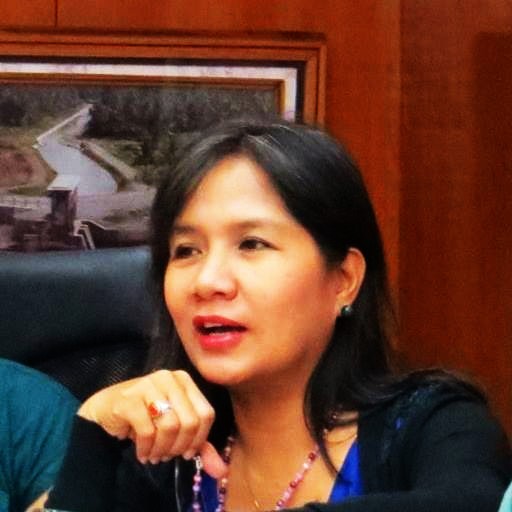
“Behind every chipped husk is a family’s dream,” reflects Ms. Arze G. Glipo, Executive Director of IRDF. “The Coco 3 Project was never just about processing coconut waste; it was about restoring dignity to labor and giving families the means to send their children to school.”
Overcoming Challenges and Building a Greener Future
The journey has not been without hurdles. Mindanao’s persistent rainy season disrupts the crucial drying process for coco chips, which must meet stringent international quality standards. This climate vulnerability has forced adaptive measures, including consolidating supply through the IRDF Demo Center.
Environmental sustainability is a cornerstone of the initiative. By valorizing husks, the project drastically reduces agricultural waste. It also promotes Climate-Smart Agriculture (CSA), with over 520 farmers planting nitrogen-fixing madre de cacao trees to improve soil health and provide sustainable biomass energy.
A Replicable Model for Sustainable Development
The IRDF-BIOGROW partnership stands as a compelling case study. IRDF builds social capital within communities, while BIOGROW ensures technical excellence and access to premium international markets.
Key recommendations for replicating and scaling the model beyond 2025 include investing in climate-resilient infrastructure like industrial dryers and enhancing transparency in export data to build investor confidence.
The technical partner, Biogrow, provided the crucial link, offering guidance and market access to transform humble husks into high-value coco chips, substrates, and organic fertilizers for markets in China, Japan, and Korea.
The scale of this transformation is staggering. The Philippines discards over 4.8 million tons of coconut husks annually, with only a tiny fraction being processed. The Demo Center is now a vital part of changing that equation.
In 2019, the project sourced just 5,000 husks. Today, it processes 20,000 husks daily, with sourcing expanded across the entire Davao del Sur. What was once trash is now a treasured commodity.
“What we used to throw away now feeds our land and our lives,” shares a farmer from Kiblawan, a sentiment echoing across the region.
Before the demo center, rural employment was a patchwork of scattered, seasonal jobs. The rhythm of life was dictated by harvests, and for some, the only path forward led overseas.
The center changed that rhythm. Now operating with flexible shifts that contribute ₱140,000 weekly to the local economy, it has become a beacon of stability.
Two former Overseas Filipino Workers (OFWs), Shiela Estacio and Eulemae Salcedo, chose to come home for the opportunity. Twelve indigenous workers, eleven Blaan and one Kaulo, now earn dignified wages close to their families. Women lead key operations, from drying to logistics, while older workers have found their niche in machine operation and quality control.
“From two eateries to six, from two husk suppliers to six, the demo center has become a heartbeat of rural progress,” says Mr. Don Jimenez, Project Manager.
Sari-sari stores are better stocked. A sense of renewed purpose has even contributed to improved peace and order. School gardens flourish, enriched by compost made from the very husks that were once burned.
The ripple effects are visible across the community. Since the project began:
- The number of local eateries has tripled from two to six.
- Sari-sari stores are stocking more goods.
- Peace and order have improved.
- School gardens flourish using compost from husk byproducts.
“What we used to throw away now feeds our land and our lives,” shared a farmer from Kiblawan.
The Legacy: A Future Rooted in Pride
As the Coco 3 Project nears its culmination in 2025, its true success is not measured in tons of substrate, but in the generational shift it has ignited.
It’s in the sight of Nono’s daughters in their graduation gowns. It’s in Elvie’s child preparing to shape young minds. It’s in the children who now learn about the circular economy by watching their parents.
The project is more than a processing plant; it is a living ecosystem of dignity and opportunity. Husk by husk, the community has chipped away at poverty, isolation, and uncertainty, building a future rooted in pride.
The fires in the fields have been extinguished. In their place, a different kind of heat burns—the warmth of hope, forged in the heart of the husk. And in every chipped and dried coconut shell, and every delivered sack, there lives a story of profound transformation.#